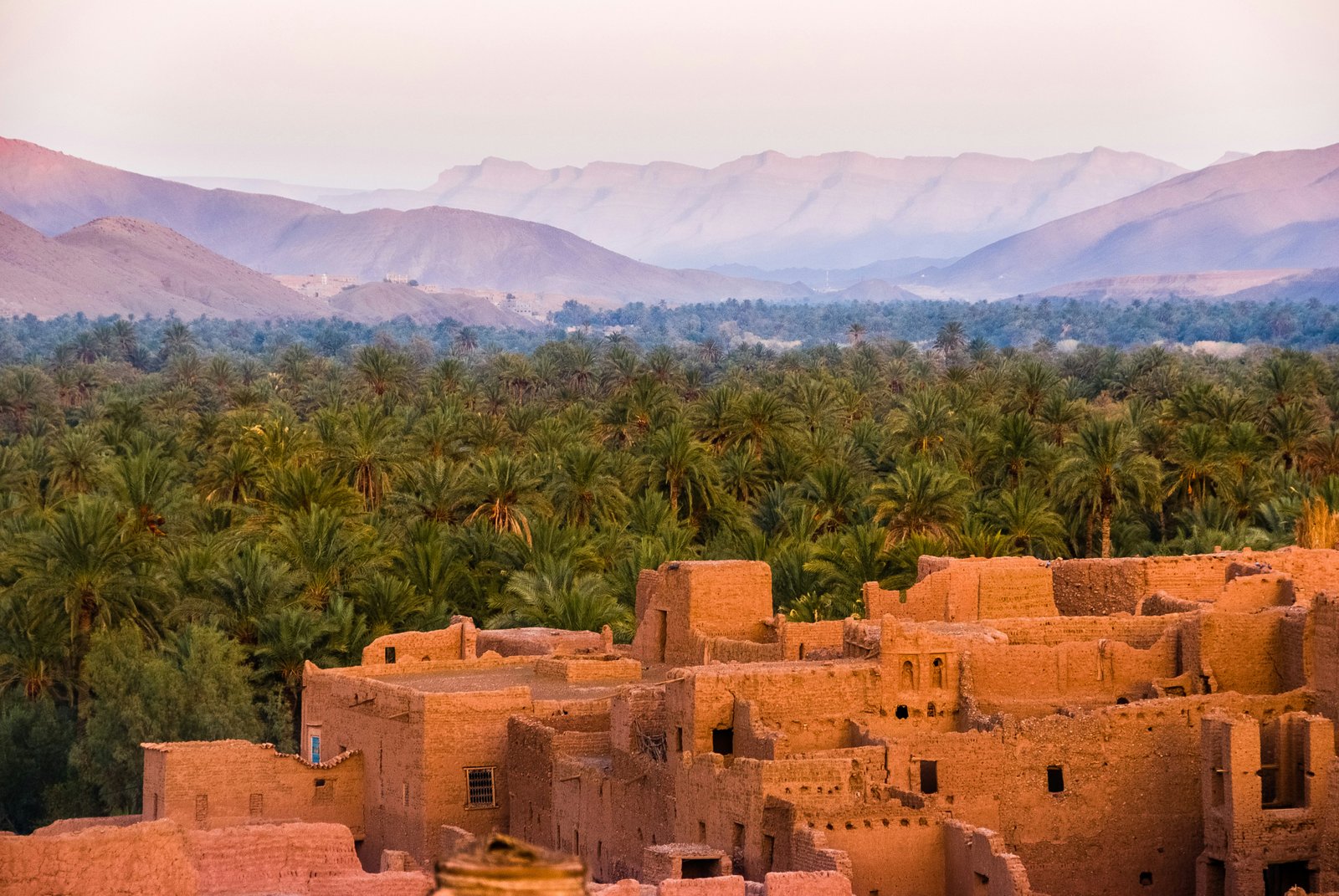
10-Day Morocco Itinerary: Marrakech, Fes & Sahara Loop
By Native Journeys Team
Most Morocco itinerary guides on the internet share a common problem: they're written by someone who visited for two weeks, hit the same five spots every tourist hits, and then went home to write about it like they cracked the code.
We grew up here.
Planning a Morocco itinerary? 10 days covers four distinct experiences — imperial cities (Marrakech, Fes), mountains (Atlas, Rif), Sahara Desert, and Atlantic coast — in a single continuous loop with no backtracking. The route runs Marrakech → Fes → Chefchaouen → Merzouga → Essaouira → Agadir, covering six destinations at a pace that lets you absorb each one rather than speed-run a checklist. Budget between 4,000 MAD and 50,000+ MAD ($400–$5,000+) depending on your travel style, with most mid-range travelers spending 800–1,500 MAD ($80–150) per day.
This itinerary comes from people who were born in Marrakech, raised in Fes, and spent their childhoods running through the same medina streets you're planning to visit. We know which riad owners actually care about their guests. We know which "famous" restaurants are coasting on TripAdvisor reviews from 2018. And we know the spots that never show up in guidebooks because nobody with a travel blog has found them yet.
This isn't a highlight reel. It's the trip we'd plan for a close friend visiting Morocco for the first time.
Let's get into it.
Your Morocco Itinerary: 10 Days at a Glance
| Day | Destination | Highlights |
|---|---|---|
| 1–3 | Marrakech | Medina, souks, Majorelle, Atlas Mountains day trip |
| 4–5 | Fes | Fes el-Bali, tanneries, Al-Qarawiyyin, local food |
| 6 | Chefchaouen | Blue Pearl streets, Rif Mountains, Spanish Mosque sunset |
| 7–8 | Sahara / Merzouga | Erg Chebbi dunes, camel trek, desert camp, stargazing |
| 9 | Essaouira | Gnawa music, ramparts, Atlantic seafood |
| 10 | Agadir / Taghazout | Surf, beach, Souk El Had, departure |
This route works best flying into Marrakech and out of Agadir (or vice versa). Flying out of Marrakech instead? Reverse the last two days and loop back — details in the transport section below.
Days 1–3: Marrakech — The Red City
Marrakech is the starting point for most Morocco itineraries — 10 days in the country begins here. Three days covers the medina and souks, Ben Youssef Madrasa, Majorelle Garden, Jemaa el-Fnaa food stalls, and an Atlas Mountains day trip to Imlil Valley. Budget 200–1,200 MAD per night. The medina is best explored early morning (before 11 AM) and late afternoon (after 4 PM) when crowds thin.
Why Three Days in Marrakech, Not Two
Marrakech deserves more than the 36 hours most itineraries give it. Two days is enough to check the boxes. Three days is enough to actually feel the city — to learn which alley leads where, to have a favorite cafe by the end, to stop clutching your phone every time someone talks to you in the souk.
Day 1: Arriving and Finding Your Rhythm
What tourists typically do: Land, taxi to riad, immediately plunge into the medina in a jet-lagged haze, get overwhelmed, eat at a rooftop restaurant overlooking Jemaa el-Fnaa.
What we actually recommend: Arrive, settle in, and keep your first afternoon simple. Walk through the mellah (the old Jewish quarter) — the mellah is far less hectic than the main medina and gives you a gentler introduction to Marrakech. Have lunch at a neighborhood restaurant, not a tourist one. Look for places where you see Moroccans eating. If the menu is only in French and Arabic, that's a good sign.
Timing tip: If you land in the morning, rest until around 4 PM. The medina comes alive in the late afternoon as temperatures drop. Visit Jemaa el-Fnaa around 5–6 PM when the food stalls are setting up but the crowds haven't peaked yet.
Local secret: Skip the orange juice sellers right on Jemaa el-Fnaa (overpriced at 15–20 MAD). Walk one block into any side street off the square and you'll find the same fresh-squeezed juice for 5–7 MAD.
Day 2: The Marrakech Medina and Souks
Morning (9–11 AM): Hit the souks early. By 11 AM the narrow streets are packed and the heat builds fast. The souk system in Marrakech is organized by trade: dyers' souk, leather souk, spice souk, metalworkers' souk. Start from Bab Debbagh (the tanners' gate) and work your way through.
Midday: Visit the Ben Youssef Madrasa. Even in 2026, Ben Youssef remains one of the most beautiful buildings in North Africa. Go right when they open to avoid tour groups. The courtyard in morning light is worth waking up early for.
Afternoon: Majorelle Garden. Yes, Majorelle is popular. It's popular for a reason. Go after 2 PM when morning tour groups have cleared out. Budget about 90 minutes. The Berber Museum inside Majorelle Garden is excellent and most visitors walk right past it.
Evening: This is your night for Jemaa el-Fnaa done right. Eat at the food stalls — look for stall numbers 14, 31, or 1 (locals know these). Get a bowl of harira soup (10 MAD), a plate of grilled meats (30–50 MAD), and watch the halqa (street performers) after dinner.
What to skip: The "Berber pharmacy" shops where someone gives you a "free tour" of spices and oils, then guilts you into buying overpriced argan oil. If you want argan oil, buy it at a women's cooperative outside Marrakech or ask your riad host — they'll know a fair source.
Day 3: Atlas Mountains or Essaouira Day Trip
You have two options from Marrakech, and both are excellent:
Option A: Atlas Mountains (Imlil Valley)
- 90 minutes from Marrakech by car
- Trek to the Berber village of Armed, have lunch with a family, walk through walnut groves
- This is NOT the Toubkal summit trek — it's a gentle valley walk suitable for anyone
- Cost: A local guide for the day runs about 300–400 MAD, transport from Marrakech about 500 MAD round trip for a private car
- Go in the morning when the Atlas Mountains are clear
Option B: Essaouira (if you're not visiting on Day 9)
- 2.5 hours by bus or grand taxi from Marrakech
- If you're planning to visit Essaouira later in this itinerary, skip this and do the Atlas trip instead
Local secret (Marrakech): The Bahia Palace is beautiful, but the El Badi Palace ruins are more atmospheric and far less crowded. Go to El Badi Palace at sunset — the storks nesting on the walls at golden hour is something you won't forget.
How Much Does a Riad Cost in Marrakech?
- Budget (200–400 MAD/night): Look for riads in the Kasbah or mellah neighborhoods. Less central but quieter and more authentic. Many family-run riads in Marrakech offer breakfast included.
- Mid-range (600–1,200 MAD/night): Riads near Bab Doukkala or Mouassine. These neighborhoods balance access to the medina with a slightly calmer vibe.
- Luxury (2,000+ MAD/night): The Marrakech riad scene is world-class. Look for places with a proper courtyard (not just a lightwell) and plunge pool.
Pro tip: Always try to book direct with the riad. Call or WhatsApp them. Booking.com takes 15–20% commission from the property — booking direct often gets you a better room, breakfast upgrade, or airport pickup included at no extra cost.
Days 4–5: Fes — The Intellectual Capital
Fes el-Bali is the largest car-free urban area in the world, with over 9,000 streets, and serves as Morocco's culinary and intellectual capital. Two days in Fes covers the old medina, Chouara Tanneries, Al-Qarawiyyin University (founded 859 CE — the world's oldest continuously operating university), and the best food in the country. Trains from Marrakech to Fes take about 7 hours and cost 150–250 MAD.
Getting to Fes from Marrakech
- Train (ONCF): The best option. Direct trains run daily, about 7 hours. First class costs around 250 MAD, second class around 150 MAD. Book at oncf.ma or at the station. The Marrakech-to-Fes train passes through beautiful countryside — grab a window seat on the left side heading north.
- Domestic flight: Royal Air Maroc flies Marrakech to Fes in about 1 hour. Prices vary but budget 500–1,200 MAD if booked in advance. Worth it if your time is tight.
- CTM Bus: About 8 hours, around 200 MAD. Less comfortable than the train but departs more frequently.
Day 4: Exploring Fes el-Bali (The Old Medina)
Fes el-Bali has over 9,000 streets. You will get lost. That's fine — getting lost in Fes is half the experience.
What tourists typically do: Hire a guide at the gate, follow them on a rushed loop through the tanneries, a carpet shop, a ceramics shop, and maybe Al-Qarawiyyin Mosque, then leave thinking they've "done" Fes.
What we actually recommend: Spend the morning without a guide. Enter through Bab Boujloud (the famous blue gate of Fes) and just walk. The Fes medina is dense but safe — if you get truly lost, ask any shopkeeper for "Bab Boujloud" and they'll point you back.
Timing tip: Visit the Chouara Tanneries in Fes between 10–11 AM when the dyers are most active. The leather workers take a break during the hottest hours. Go to a leather shop on the terrace level — they'll offer you mint to hold under your nose (the smell is strong). The shop owners expect you to look at their products afterward, but you're not obligated to buy.
Afternoon: Al-Qarawiyyin Mosque and University — founded in 859 CE, Al-Qarawiyyin is the oldest continuously operating university in the world. Non-Muslims can't enter the mosque, but you can see the stunning courtyard from the doorway, and the surrounding streets of Fes are worth exploring slowly.
Day 5: Local Fes and Food
Morning: Visit the Merenid Tombs above the city. It's a 20-minute walk uphill from Bab Guissa. The panoramic view of Fes el-Bali from the Merenid Tombs is the best in the city — and at 9 AM you'll have it mostly to yourself.
What to Eat in Fes — Morocco's Culinary Capital
Fes is Morocco's culinary capital. Here's what to eat in Fes:
- Pastilla (b'stilla): The Fassi version with pigeon and powdered sugar is the original. Ask your riad host where to find the best pastilla — it varies year to year.
- Rfissa: Shredded msemen bread with lentils and chicken. Rfissa is comfort food that doesn't show up on tourist menus.
- Mechoui: Slow-roasted lamb. Look for small restaurants near Bab Boujloud where the lamb turns on a spit.
Afternoon: The Dar Batha Museum for Fassi ceramics and woodwork, or the Borj Nord (fortress) for another panoramic view of Fes. Alternatively, visit the Jewish cemetery and synagogue in the mellah — a quiet, moving reminder of Fes's multicultural history.
Local secret (Fes): Fatima, one of our consultants, was born in the Fes medina. Her top recommendation: skip the tourist restaurants on the main Talaa Kebira street and find Cafe Clock on Derb el Magana. Cafe Clock is a cultural cafe with live Gnawa music on weekends and serves a camel burger that's become legendary. But more importantly, the Cafe Clock rooftop is one of the best places in Fes to watch the sunset call to prayer, when dozens of muezzins sing out across the medina simultaneously.
Fes Accommodation
- Budget (150–350 MAD/night): Riads near Bab Boujloud. You'll hear the call to prayer from five directions — set it as your alarm.
- Mid-range (500–1,000 MAD/night): Riads deeper in the Fes medina with restored zellij tilework. The Andalusian quarter is less touristed and gorgeous.
- Luxury (1,500+ MAD/night): Some of the most stunning riad restorations in the country are in Fes. Full courtyard palaces with mosaic pools.
Day 6: Chefchaouen — The Blue Pearl
Chefchaouen is a small blue-washed town in the Rif Mountains of northern Morocco, reachable in about 4 hours by bus from Fes. One full day is enough to walk the entire medina, hike to the Spanish Mosque for the best sunset viewpoint in northern Morocco, and experience the town's relaxed mountain pace. Budget 150–400 MAD per night for a riad with a rooftop terrace.
Getting to Chefchaouen from Fes
- CTM Bus: The most reliable option. About 4 hours from Fes, 75–100 MAD. Departures usually in the morning.
- Grand taxi: Faster (about 3–3.5 hours) but less comfortable. Around 100–120 MAD per person. Taxis leave from the grand taxi station near the Fes train station when full (6 passengers).
How to Spend One Day in Chefchaouen
One full day in Chefchaouen is enough. The town is small — you can walk the entire Chefchaouen medina in a couple of hours. The magic is in the pace, not the checklist.
Morning: Arrive early if you can. Walk the Chefchaouen medina before 10 AM when the day-trip crowds from Fes and Tangier haven't arrived yet. The blue-washed streets photograph best in early morning light when the sun is low and the shadows are long.
What tourists typically do: Walk the main street, take photos of blue walls, buy a blue-and-white ceramic plate, leave.
What we actually recommend: Get off the main drag. Walk uphill through the residential streets of Chefchaouen toward the Rif Mountains. The deeper you go, the bluer and quieter it gets. Visit the Kasbah (20 MAD entry) — the garden inside the Kasbah is peaceful, and the tower gives you an elevated view of the blue sea of buildings below.
Afternoon: Hike to the Spanish Mosque. It's about a 30-minute walk uphill from the Chefchaouen medina. Not strenuous. The mosque itself is a ruin — it's the viewpoint that matters. You'll look down on the entire blue city of Chefchaouen against the green Rif Mountains.
Timing tip: Be at the Spanish Mosque by 5:30–6 PM for sunset (timing varies by season — check locally). The Spanish Mosque is the single best sunset viewpoint in northern Morocco. Bring water and something to sit on.
Evening: Eat in the medina. Chefchaouen's food scene is simpler than Marrakech or Fes — and that's the charm. Try goat tagine, which is a Rif Mountain specialty. The restaurants along Place Outa el Hammam (the main square) are decent and have views of the Kasbah.
Local secret (Chefchaouen): The Ras el-Maa waterfall at the edge of the medina is where local women do laundry and kids splash around. Ras el-Maa is not a tourist attraction — it's daily life. Sit on the rocks, drink tea from the cafe next to it, and watch the water run down from the Rif Mountains. It's the most peaceful spot in Chefchaouen.
Chefchaouen Accommodation
Stay one night. Riads in Chefchaouen are simpler and cheaper than Marrakech or Fes — expect 150–400 MAD for a clean, comfortable room with a terrace. Terraces matter in Chefchaouen. You want to see the blue rooftops.
Days 7–8: Sahara Desert — Merzouga and Erg Chebbi
The Sahara Desert at Merzouga is the highlight of any Morocco itinerary — 10 days gives you enough time to reach Erg Chebbi without rushing. Erg Chebbi is Morocco's largest sand dune field, with dunes reaching 150 meters high, offering camel treks, overnight desert camping, Milky Way stargazing, and sandboarding. The journey from Chefchaouen to Merzouga takes roughly 10 hours by road — but the desert is worth every hour.
Getting to Merzouga from Chefchaouen
Let's be honest: this is the longest travel day in the itinerary. Chefchaouen to Merzouga is roughly 10 hours by road. There's no shortcut.
Best approach: Return to Fes first (4 hours by bus or taxi), then continue to Merzouga (about 7–8 hours). You can break this up by spending a night in Midelt or Errachidia along the way. Alternatively, book a private transfer that drives through the Middle Atlas with stops at Ifrane (the "Switzerland of Morocco") and the cedar forests where Barbary macaques live.
Cost: A private car from Fes to Merzouga runs about 1,500–2,500 MAD depending on the vehicle and stops. Shared transfers are available for 300–500 MAD per person — your accommodation in Merzouga can usually arrange this.
The route sequencing between Chefchaouen and Merzouga is where most travelers waste a full day — the wrong connection or a badly timed overnight stop turns a manageable journey into a stressful one. This is the kind of logistical detail that changes based on the season, your pace, and whether you're on buses or private transfers. We walk through these exact connections with travelers on our route-planning calls — it's the single most common question we get.
Day 7: Arriving at the Sahara
Most travelers arrive in Merzouga in the afternoon, which works perfectly. The Erg Chebbi dunes are right there — literally at the edge of the Merzouga town.
Late afternoon: Your desert camp will send someone to meet you. You'll ride camels (or drive by 4x4 if you prefer) into the Erg Chebbi dunes to your camp. The camel ride takes about 1–1.5 hours and crosses the dune field as the sun drops.
Evening: Dinner at camp under the stars. Most Sahara camps serve a communal tagine and couscous dinner, followed by Berber drumming around the fire. After the music winds down, walk away from the camp lights and look up. The Sahara sky in Merzouga is one of the darkest in North Africa — you'll see the Milky Way with your bare eyes, no filter needed.
Day 8: Sahara Sunrise and the Desert Morning
What tourists typically do: Wake up for sunrise on the dunes, take photos, ride camels back, check out, and leave Merzouga.
What we actually recommend: Yes, wake up for sunrise — the Erg Chebbi sunrise is worth it. The dunes change color from deep orange to gold to pale peach in about 20 minutes. But don't rush back to Merzouga afterward. Spend the morning in the desert. Sandboard down the dunes. Walk barefoot on the ridgelines. Sit in silence. The Sahara teaches you something about stillness that you can't get anywhere else.
Afternoon: Back in Merzouga, visit the Khamlia village — a small Gnawa community about 7 km south of Merzouga. The Khamlia community welcomes visitors with live Gnawa music and tea. This isn't a tourist show; it's a living cultural tradition. A small donation (50–100 MAD) is appropriate and appreciated.
Local secret (Merzouga): Most people don't know that Merzouga has a seasonal lake (Dayet Srji) that appears in spring and attracts flamingos. If you're visiting Merzouga between February and May, ask your camp if Dayet Srji has water — pink flamingos against Sahara dunes is surreal and almost nobody photographs it.
How Much Does a Sahara Desert Camp Cost?
- Budget (200–400 MAD/night): Basic desert camps with shared tents. Functional, authentic, no frills. The stars are the same.
- Mid-range (600–1,200 MAD/night): Private tents with real beds, hot showers, and better food. This is the sweet spot for most travelers visiting the Sahara.
- Luxury (2,500+ MAD/night): Glamping camps with king beds, private bathrooms, and sometimes even air conditioning. The experience is polished but you're still in the Sahara.
Day 9: Essaouira — The Windy City
Essaouira is a breezy Atlantic port town 2.5 hours west of Marrakech, known for Gnawa music, Portuguese sea ramparts, and some of the freshest seafood in Morocco. Essaouira's medina is compact, walkable, and the opposite of Marrakech's intensity. One day covers the ramparts, the fishing port, the fish market grill stalls, and a walk to the ruined Borj el Berod.
Getting to Essaouira
From Merzouga, you'll drive west toward Marrakech and then continue to Essaouira. This is another long travel day (about 10 hours total), so most travelers break the drive in Marrakech or Ouarzazate.
Alternative route: Drive from Merzouga to Ouarzazate (about 5 hours) through the stunning Dades and Todra Gorges, overnight in Ouarzazate, then continue to Essaouira the next morning through Marrakech. If you take this route, your Essaouira day becomes Day 10 and you adjust accordingly.
Marrakech to Essaouira: 2.5 hours by Supratours bus (about 80 MAD) or grand taxi (80–100 MAD per person). Easy, scenic, and the road to Essaouira passes through argan tree country — you'll see goats climbing the trees, which is exactly as absurd as it sounds.
What to Do in Essaouira in One Day
Essaouira is Marrakech's opposite: breezy, relaxed, and coastal. The Essaouira medina is compact, walkable, and far less intense.
Morning: Walk the ramparts (the old Portuguese sea walls). The cannons still point out at the Atlantic. The Essaouira fishing port below is active early morning — watch the blue boats come in and the fish auction happen right on the dock.
What tourists typically do: Walk the main street, buy a thuya wood box, eat at a seafood restaurant with a "recommended by Lonely Planet" sticker.
What we actually recommend: Go to the fish market at the Essaouira port and choose your own fish. The grill stalls next to the market will cook it for you on the spot — just pick your fish, negotiate the price (expect 50–100 MAD for a generous plate), and they'll grill it with chermoula sauce while you wait. This is the best seafood meal you'll have in Morocco.
Afternoon: Essaouira is the spiritual home of Gnawa music. If you visit Essaouira during the Gnawa Festival (usually June), the entire city becomes a stage. But even outside the festival, you'll hear Gnawa rhythms in the streets and cafes of Essaouira. Visit the Sidi Mohamed Ben Abdallah Museum for context on the genre's African roots.
Evening: Walk along the Essaouira beach toward the ruined Borj el Berod — the old fort partially swallowed by sand on the south end of the beach. At low tide you can walk right up to Borj el Berod. Jimi Hendrix supposedly visited Essaouira in the '60s (the locals will tell you he lived there — the truth is more like a long weekend).
Local secret (Essaouira): The wind in Essaouira is legendary and relentless, especially in the afternoon. Mornings are usually calmer. If you're not into wind, plan your walking for before noon. But if you are into it — Essaouira is one of the best kitesurfing and windsurfing spots in Africa. Rentals are easy to find along the beach.
Day 10: Agadir and Taghazout — Coast and Departure
Agadir is a modern beach city on Morocco's southern Atlantic coast, and nearby Taghazout (20 minutes north) is Morocco's surf capital with world-class breaks at Anchor Point, Killer Point, and Hash Point. Together, Agadir and Taghazout offer a relaxed final day of beach, surf, and the massive Souk El Had market before departure from Al Massira Airport.
Getting to Agadir from Essaouira
- Bus (Supratours or CTM): About 3 hours from Essaouira, 70–90 MAD. Comfortable and direct.
- Grand taxi: About 2.5 hours, roughly 80–100 MAD per person.
Making the Most of Your Last Day in Morocco
If you're a surfer: Go straight to Taghazout, 20 minutes north of Agadir. Taghazout is Morocco's surf capital. The breaks at Anchor Point, Killer Point, and Hash Point are world-class. Board and wetsuit rental in Taghazout runs about 150–200 MAD for a half day. Surf lessons start around 300 MAD. Even if you've never surfed, the vibe in Taghazout is worth the visit — it's a laid-back village of surfers, yoga retreats, and fresh smoothie bowls.
If you're not a surfer: Agadir's main draw is the beach — a long, wide crescent of sand with actual sun loungers and calm water (unlike windy Essaouira). Visit Souk El Had in Agadir, one of the largest markets in North Africa. Souk El Had is not a tourist souk — this is where Agadir residents buy everything from produce to electronics. The spice section alone is worth an hour.
What tourists typically do: Skip Agadir entirely because guidebooks call it "modern and characterless."
What we actually recommend: Agadir was rebuilt after a devastating earthquake in 1960, so Agadir lacks the ancient medina vibe of other Moroccan cities. But that's not a flaw — it's a different side of Morocco. The rebuilt city is wide, sunny, and modern. Eat at a seafood restaurant on the Agadir port. Walk the corniche. If you have time, drive up to the Agadir Oufella ruins for a sunset view over the city and the Atlantic.
Adam, one of our consultants, grew up in the Agadir-Taghazout area. His top recommendation: eat at a small fish grill in Taghazout village rather than the tourist restaurants along the main road. The local spots serve the same fresh catch for a third of the price, and the fishermen can tell you what they caught that morning.
Local secret (Agadir/Taghazout): Paradise Valley is a palm-lined gorge with natural swimming pools about 30 minutes from Taghazout. Paradise Valley is popular with locals on weekends but fairly quiet on weekdays. If you have a half day before your flight, this is a stunning final Morocco experience — swimming in clear pools surrounded by red rock walls. Hire a local driver or taxi (about 200 MAD round trip).
Departure
Al Massira Airport (AGA) in Agadir has direct flights to major European cities. If you're flying out of Marrakech instead, Supratours runs a direct bus from Agadir (about 3.5 hours, 120 MAD) or you can arrange a private transfer.
Getting Between Cities: Morocco Transport Guide (2026 Prices)
Morocco has four main intercity transport options: ONCF trains (connecting Marrakech, Fes, Casablanca, Rabat, and Tangier), CTM and Supratours buses (reaching cities trains miss, including Chefchaouen, Essaouira, and Agadir), shared grand taxis (faster than buses at 10–30% higher cost), and private transfers (best for desert trips at 1,500–2,500 MAD per car). Here's how each option works with 2026 prices.
Trains (ONCF)
Morocco's ONCF train network connects Marrakech, Casablanca, Rabat, Fes, Tangier, and Oujda. The ONCF train network does NOT reach Chefchaouen, Merzouga, Essaouira, or Agadir.
- Marrakech → Fes: ~7 hours, 250 MAD first class / 150 MAD second class
- Marrakech → Casablanca: ~3 hours, 150 MAD first class
- Book at oncf.ma or at the station. First class is worth it for long journeys — the seats are wider and the cars are quieter.
Buses (CTM and Supratours)
- CTM is Morocco's main intercity bus company — comfortable, air-conditioned, reliable schedules. Book at ctm.ma.
- Supratours is run by ONCF and connects train stations to cities the trains don't reach (Essaouira, Agadir, Chefchaouen).
- Fes → Chefchaouen: CTM, ~4 hours, 75–100 MAD
- Marrakech → Essaouira: Supratours, ~2.5 hours, 80 MAD
- Essaouira → Agadir: Supratours, ~3 hours, 70–90 MAD
Grand Taxis
Shared grand taxis are Morocco's informal public transport system. Grand taxis are typically old Mercedes sedans that seat 6 passengers and leave when full. Grand taxis are faster than buses but less comfortable.
- Fes → Chefchaouen: ~100–120 MAD per person
- Most intercity routes: 10–30% more expensive than buses but 20–30% faster
- You can pay for multiple seats if you want more space (buy 2 seats for 1 person — locals do this too)
Private Transfers in Morocco
For desert trips or complex routes, private drivers are common and reasonably priced in Morocco.
- Fes → Merzouga: 1,500–2,500 MAD for the whole car (up to 4 passengers)
- Marrakech → Essaouira: 600–800 MAD for the whole car
- Your riad or hotel can always arrange a driver — ask for the price first and compare with what you find online.
Domestic Flights in Morocco
Royal Air Maroc and Air Arabia Maroc fly between major Moroccan cities. Domestic flights are useful for Marrakech → Fes if you want to save 7 hours. Prices range from 500–1,500 MAD depending on how far in advance you book.
Morocco Budget Guide: How Much Does 10 Days Actually Cost?
A 10-day trip to Morocco costs between 4,000 MAD ($400) for budget backpackers using public transport and budget riads and 50,000+ MAD ($5,000+) for luxury riads, private drivers, and glamping camps — not including international flights. The mid-range sweet spot is 8,000–15,000 MAD ($800–1,500) total for 10 days. Morocco is one of the most affordable travel destinations accessible from Europe, with daily costs roughly 40–60% lower than Southern Europe for equivalent quality.
These are approximate daily budgets in Moroccan Dirhams (1 USD ≈ 10 MAD in 2026).
Budget Traveler: 400–600 MAD/day ($40–60 USD)
- Accommodation: 150–300 MAD (budget riads, hostels, basic desert camps)
- Food: 100–150 MAD (street food, local restaurants, self-catering)
- Transport: 50–100 MAD (buses, shared grand taxis)
- Activities: 50–100 MAD (museum entries, guided walks)
- 10-day total: 4,000–6,000 MAD ($400–600 USD), not including international flights
This is very doable. Morocco is one of the most affordable countries to travel in. At this budget, you eat well, sleep in real riads (not hostels), and take public transport everywhere.
Mid-Range Traveler: 800–1,500 MAD/day ($80–150 USD)
- Accommodation: 400–800 MAD (charming riads, private rooms, mid-range desert camps)
- Food: 150–300 MAD (mix of local restaurants and riad dinners)
- Transport: 100–200 MAD (mix of buses, grand taxis, occasional private transfers)
- Activities: 100–200 MAD (guides, cooking classes, hammam visits)
- 10-day total: 8,000–15,000 MAD ($800–1,500 USD), not including international flights
This is the sweet spot. You get beautiful accommodations, eat wherever you want, and don't have to think twice about grabbing a taxi.
Luxury Traveler: 2,000+ MAD/day ($200+ USD)
- Accommodation: 1,500–5,000+ MAD (luxury riads, boutique hotels, glamping camps)
- Food: 300–800 MAD (fine dining, private riad dinners, cooking experiences)
- Transport: 500+ MAD (private drivers, domestic flights)
- Activities: 300+ MAD (private guides, exclusive experiences, spa and hammam)
- 10-day total: 20,000–50,000+ MAD ($2,000–5,000+ USD), not including international flights
Morocco does luxury exceptionally well. The riad hospitality culture means even high-end stays feel personal, not corporate.
The hardest part of budgeting for Morocco isn't the math — it's the timing. Prices shift seasonally — what was a 300 MAD riad last month is 600 MAD in peak season, and riads that were fully booked in April sometimes offer 40% discounts in November. These numbers are accurate for 2026, but the specific deals change week to week — faster than any guide can keep current. Our team tracks real-time pricing across all six cities on this route and can flag where your budget stretches furthest for your specific dates. See what a budget-planning call covers →
Essential Morocco Travel Tips
Morocco is a year-round destination with distinct seasonal trade-offs, a cash-based economy using the Moroccan Dirham (MAD), and cultural norms around dress and language varying by city and neighborhood. The following Morocco travel tips cover timing, money, language basics, dress code, and safety for first-time visitors.
Best Time to Visit Morocco
- March–May: Ideal. Warm but not hot, green landscapes, wildflowers in the Atlas Mountains.
- September–November: Also excellent. Summer heat fades, crowds thin, the Sahara Desert becomes comfortable.
- June–August: Hot inland (Marrakech hits 40°C+), but the coast (Essaouira, Agadir) stays pleasant.
- December–February: Cool to cold, especially in the mountains and desert at night. But Marrakech stays mild and tourism is at its lowest — great deals on riads.
Money in Morocco
- Currency: Moroccan Dirham (MAD). You cannot buy MAD outside Morocco.
- ATMs are everywhere in Moroccan cities. Withdraw MAD on arrival.
- Credit cards accepted at mid-range and luxury hotels, some restaurants. Cash is king everywhere else in Morocco.
- Tipping: 10% at restaurants, 10–20 MAD for small services (luggage help, parking attendants), 100–200 MAD/day for guides.
Language in Morocco
French and Darija (Moroccan Arabic) are the dominant languages in Morocco. In tourist areas, many people speak English, Spanish, or German.
Learning a few Darija phrases goes a long way:
- "Salam" — Hello
- "Shukran" — Thank you
- "Bslama" — Goodbye
- "Bshhal?" — How much?
- "La shukran" — No thank you (essential in the souks)
What to Wear in Morocco
Morocco is a Muslim-majority country, and modest dress is appreciated, especially outside tourist areas. For women, covering shoulders and knees is a good baseline. In Marrakech and Essaouira, you'll see everything from djellabas to tank tops — use your judgment based on the neighborhood. Men can wear shorts in tourist areas but long pants are better for medina visits.
Is Morocco Safe for Tourists?
Morocco is one of the safest countries in Africa for tourists. Violent crime targeting visitors is extremely rare. Morocco has a strong tourism infrastructure and a dedicated tourist police force in major cities. The most common issues tourists face in Morocco are non-violent: overcharging, aggressive souk sellers, and unofficial "guides."
Practical safety tips for Morocco:
- Agree on prices BEFORE getting in a taxi, eating at a market stall, or accepting a "guide" in the medina
- The "my uncle's shop" invitation is always a sales pitch
- Fake guides at medina entrances will offer to "show you around" then demand payment — hire official guides through your riad instead
- Women traveling solo in Morocco: manageable but not hassle-free. Verbal attention in cities is common. Walking with purpose, wearing sunglasses, and having a firm "la shukran" ready helps. Chefchaouen, Essaouira, and Taghazout tend to be the most relaxed cities for solo female travelers.
What to Do Next
The 10-day Morocco itinerary above is a strong starting point, but every trip has variables a written guide can't predict — your travel dates, whether you're traveling during Ramadan, how much heat you can handle, and whether a 10-hour drive through the Atlas sounds like an adventure or a dealbreaker. Travel dates, pace, and seasonal factors change the route.
Native Journeys is a team of Moroccans — Youssef in Marrakech, Fatima in Fes, Adam in Agadir — who do 1-on-1 video calls with travelers to adjust itineraries like this one to fit their specific trip. No group tours. No packages. Just a conversation with someone who knows Morocco like home.
See how a route-planning call works →
FAQ
Is 10 Days Enough for Morocco?
Ten days is the ideal length for a first visit to Morocco. A 10-day itinerary covers the four main experiences — imperial cities, mountains, Sahara Desert, and coast — at a pace that feels like traveling, not speed-running a checklist. If you have less time, cut Chefchaouen or Essaouira. If you have more, add Ouarzazate and the Dades Valley, or spend extra days in Fes and Marrakech.
What Is the Best Route for 10 Days in Morocco?
The best 10-day Morocco route is Marrakech → Fes → Chefchaouen → Sahara → Essaouira → Agadir — or a variation of it. This route moves in a continuous loop so you don't backtrack, and it covers all four "flavors" of Morocco: city, mountain, desert, and coast. For repeat visitors, the south is underrated: the Draa Valley, Tata, Sidi Ifni, and the Anti-Atlas see very few international tourists and are beautiful.
How Much Does a 10-Day Trip to Morocco Cost?
A 10-day Morocco trip including international flights from Europe typically costs 7,000–10,000 MAD ($700–1,000) per person (budget), 15,000–25,000 MAD ($1,500–2,500) per person (mid-range), or 30,000–70,000+ MAD ($3,000–7,000+) per person (luxury). Morocco is significantly cheaper than Southern Europe — accommodation and food in Morocco cost roughly 40–60% less than equivalent quality in Spain, Italy, or Greece.
Is Morocco Safe for Tourists?
Morocco is safe for tourists. Morocco has a strong tourism infrastructure, a dedicated tourist police force in major cities, and invests heavily in tourism safety because tourism is a major part of the Moroccan economy. The most common issues tourists face are non-violent: overcharging, aggressive souk sellers, and unofficial "guides." Use common sense — agree on prices beforehand, keep valuables close in crowded areas, and don't wander alone in unfamiliar medina alleys late at night.
Do I Need a Visa for Morocco?
Citizens of the US, EU, UK, Canada, Australia, and many other countries get visa-free entry to Morocco for up to 90 days. Check your country's specific requirements before traveling to Morocco.
Should I Book a Group Tour or Travel Morocco Independently?
Morocco is very manageable to travel independently. Trains, buses, and riads are easy to book, and English is widely spoken in tourist areas of Morocco. The main challenge is logistics — route sequencing, transport connections, seasonal price shifts, and knowing which neighborhoods, riads, and restaurants are actually worth your time versus coasting on outdated reviews. That gap between "technically possible to plan" and "actually well-planned" is where most travelers either waste days on bad connections or overpay for underwhelming experiences.
Written by the Native Journeys team — born, raised, and still living in Morocco.