How Much Things Cost in Morocco in 2026 (Local Prices)
By Native Journeys Team
Every travel blog gives you a daily budget number. "Morocco costs $50–$80 a day!" Great. But what does a tagine actually cost at a local restaurant versus the one facing Jemaa el-Fna? What should a petit taxi across Marrakech run you? And why did that carpet seller just quote you 4,000 MAD for a rug your riad host says is worth 800?
The cost of things in Morocco in 2026 ranges from 10 MAD ($1) for a filling street food meal to 1,000+ MAD ($100) per night for a mid-range riad — making Morocco 40–60% cheaper than Western Europe for nearly everything. The Moroccan dirham (MAD) currently trades at approximately 10 MAD to 1 USD and 11 MAD to 1 EUR, which makes mental math straightforward: drop a zero for a rough dollar conversion.
This post breaks down real 2026 prices across food, accommodation, transport, shopping, and experiences — in dirhams, with the local-price versus tourist-price gap called out where it matters.
What Street Food and Restaurant Meals Cost in Morocco
Street food in Morocco costs between 10 and 50 MAD per meal ($1–$5), making Morocco one of the most affordable countries for eating well on a budget. A sit-down tagine at a local neighborhood restaurant costs 30–50 MAD, while the same tagine at a tourist-facing restaurant on Jemaa el-Fna in Marrakech costs 90–120 MAD — a 2–3x markup for the same dish.
Here's what specific items cost in 2026:
Street food and snacks:
- Tuna, egg, or potato sandwich: 10–20 MAD
- Msemen (Moroccan flatbread) from a street vendor: 3–5 MAD
- Grilled kebab plate with bread: 25–40 MAD
- Harira soup (bowl): 5–10 MAD
- Bissara (fava bean soup): 5–8 MAD
- Roasted corn on the cob: 5–10 MAD
Sit-down restaurants:
- Tagine at a local restaurant: 30–50 MAD
- Tagine at a tourist restaurant: 90–150 MAD
- Couscous Friday special: 40–60 MAD
- Full meal (tagine + salad + tea) for two: 80–150 MAD
- Mid-range restaurant meal per person: 50–100 MAD
Drinks:
- Mint tea: 4–10 MAD (cafés in medinas) / 20–35 MAD (hotel terraces)
- Coffee (noss-noss or espresso): 8–15 MAD
- Fresh orange juice (Jemaa el-Fna): 5–10 MAD
- Bottle of water (1.5L): 5–8 MAD
- Soft drink: 8–12 MAD
The biggest price gap in Moroccan food exists between medina-edge tourist restaurants and the local spots one or two streets deeper. Walking 200 meters off a main square in Marrakech, Fes, or Chefchaouen typically cuts meal prices in half.
What Accommodation Costs Across Morocco
Accommodation in Morocco ranges from 100 MAD per night for a hostel dorm bed to 2,000+ MAD per night for a luxury riad suite — with the widest selection sitting in the 300–700 MAD mid-range. Morocco's riad-style guesthouses (traditional courtyard homes converted into lodging) offer a category of accommodation found nowhere else at Morocco's price point.
Budget accommodation:
- Hostel dorm bed: 80–150 MAD ($8–$15)
- Basic guesthouse private room: 150–300 MAD ($15–$30)
- Budget riad private room: 250–500 MAD ($25–$50)
Mid-range accommodation:
- Mid-range riad (private room, breakfast included): 500–1,000 MAD ($50–$100)
- 3-star hotel: 400–800 MAD ($40–$80)
- Airbnb apartment (city center): 350–700 MAD ($35–$70)
Luxury accommodation:
- Boutique riad suite: 1,200–3,000 MAD ($120–$300)
- 5-star hotel: 2,000–5,000+ MAD ($200–$500+)
Important 2026 context: Morocco co-hosts the 2030 FIFA World Cup with Spain and Portugal. Accommodation prices across Morocco have risen 15–20% since 2024, and hotel prices are projected to climb another 10–15% annually through 2030. Travelers visiting Morocco in 2026 are catching the last window before World Cup infrastructure spending pushes prices significantly higher in Marrakech, Casablanca, and Rabat.
Prices also vary by city. A mid-range riad in Chefchaouen or Essaouira typically costs 30–40% less than an equivalent room in Marrakech or Fes. Shoulder season months (April–May and September–October) offer the best rates across all categories.
What Transport Costs Within Morocco
A petit taxi ride across central Marrakech costs 15–25 MAD ($1.50–$2.50), and a second-class train ticket from Marrakech to Casablanca costs 90–150 MAD ($9–$15). Morocco's transport system is affordable by any standard, but prices vary sharply between local transport and tourist-oriented options.
City transport:
- Petit taxi (within city): 10–30 MAD
- Public bus (city): 4–6 MAD
- Tram (Casablanca/Rabat): 6–8 MAD
Intercity transport:
- Train, Marrakech → Casablanca (2nd class): 90–120 MAD
- Train, Marrakech → Casablanca (1st class): 140–170 MAD
- Al Boraq high-speed train, Casablanca → Tangier: 200–320 MAD
- CTM bus, Marrakech → Essaouira: 80–100 MAD
- Supratours bus, Marrakech → Ouarzazate: 90–130 MAD
- Grand taxi (shared, per seat): 30–80 MAD depending on route
Tourist transport:
- Private driver, full day: 800–1,500 MAD
- Airport transfer (Marrakech Menara → medina): 70–150 MAD
- Desert excursion transport (Merzouga round trip): 1,500–3,000 MAD
Taxi pricing reality: Petit taxis in Marrakech, Casablanca, and Rabat have meters — but drivers routinely skip them for tourists. The metered fare across central Marrakech rarely exceeds 20 MAD. If a driver quotes 50+ MAD for an in-city ride, the driver is charging a tourist premium. Asking for the meter ("le compteur, s'il vous plaît" or just tapping the meter) usually resolves it.
Grand taxis — the shared intercity Mercedes sedans — charge per seat, not per car. A seat from Marrakech to Essaouira costs roughly 70–80 MAD per person. You can also buy all six seats (around 420–480 MAD) for a private ride.
What Souk Shopping and Experiences Cost
A handmade Berber carpet in Morocco's souks ranges from 800 to 5,000+ MAD ($80–$500+) depending on size, age, and weave density, while leather babouche slippers cost 60–150 MAD ($6–$15) and a kilo of cumin or ras el hanout costs 30–60 MAD ($3–$6). Souk prices in Morocco are negotiated, not fixed — and the spread between the first asking price and the fair price is typically 40–60%.
Textiles and leather:
- Berber carpet (small, 1m x 1.5m): 800–2,000 MAD
- Beni Ourain rug (large): 2,000–5,000+ MAD
- Leather bag (genuine): 200–600 MAD
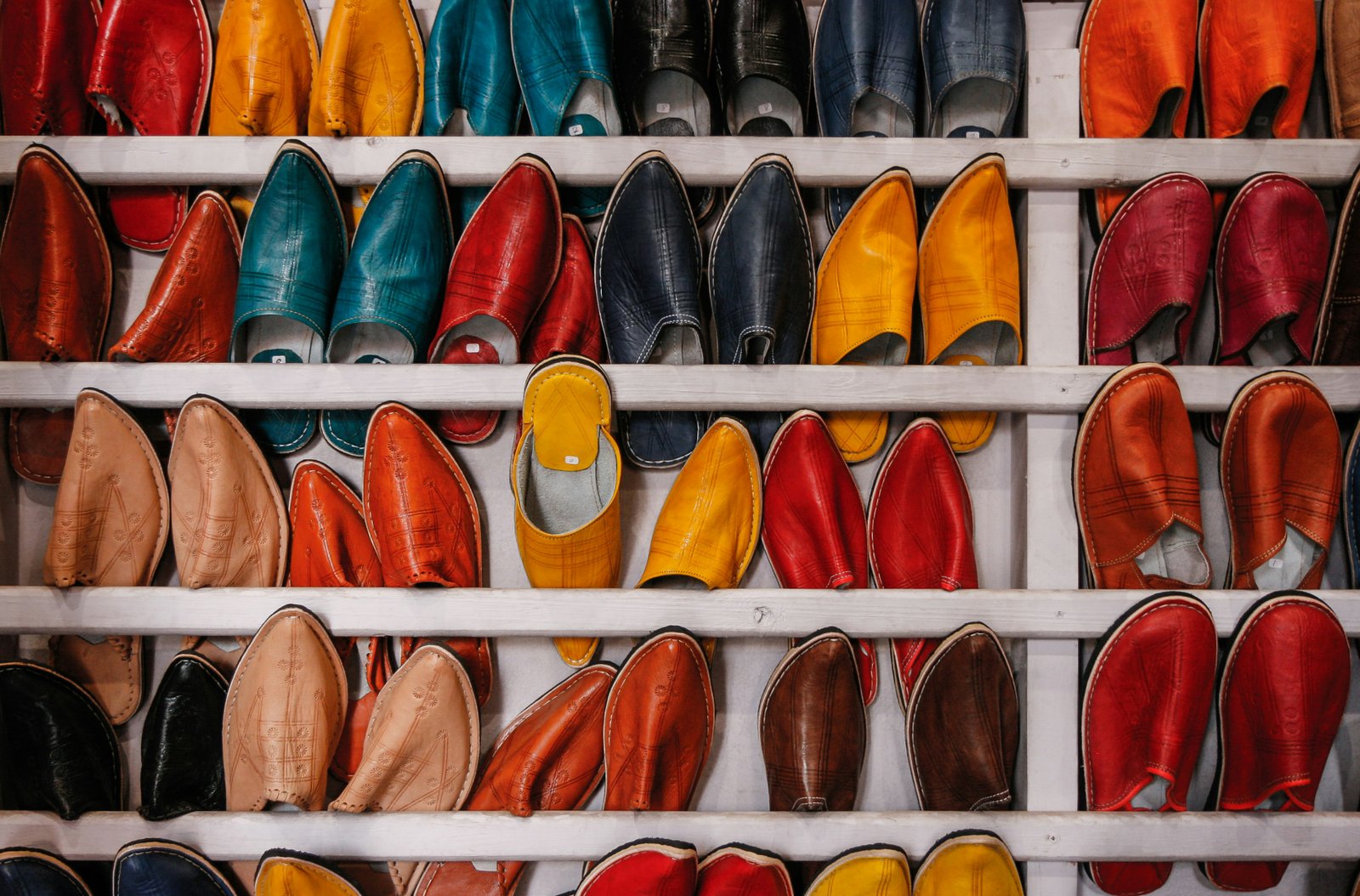
- Leather babouche slippers: 60–150 MAD
- Woven scarf or blanket: 100–300 MAD
Spices and food goods:
- Cumin, turmeric, ras el hanout (per kg): 30–60 MAD
- Saffron (per gram): 20–40 MAD
- Argan oil (culinary, per liter): 200–400 MAD
- Argan oil (cosmetic, per liter): 300–500 MAD
- Preserved lemons (jar): 15–30 MAD
Ceramics and homewares:
- Hand-painted ceramic plate: 50–200 MAD
- Tagine pot (decorative): 80–250 MAD
- Brass lantern (medium): 200–600 MAD
- Thuya wood box: 50–200 MAD
Experiences and entry fees:
- Traditional hammam (local, public): 10–20 MAD
- Tourist hammam with scrub and massage: 150–400 MAD
- Jardin Majorelle (Marrakech) entry: 150 MAD
- Bahia Palace entry: 70 MAD
- Madrasa Bou Inania (Fes) entry: 30 MAD
- Guided medina walking tour: 200–400 MAD
- Cooking class (half day): 350–600 MAD
- Camel ride (Merzouga, 1 hour): 200–400 MAD
Bargaining reality: The first price a souk vendor quotes is almost never the real price. For most items, start your counter at 30–40% of the asking price. For high-value items like rugs, start at 20–25%. The final agreed price typically lands at 40–60% of the initial quote. Walking away is the most effective negotiation tool — if the vendor lets you leave, you were probably already close to the floor.
Prices in Marrakech and Fes medinas run 20–40% higher than the same items in smaller cities like Meknes, Tiznit, or Taroudant. If souk shopping is a priority, smaller cities offer better value and less aggressive sales tactics. Native Journeys covers bargaining techniques and real price ranges as part of its consultation service.
The Real Daily Budget for Morocco in 2026
A realistic daily budget for Morocco in 2026 breaks down to 300–500 MAD ($30–$50) for budget travelers, 700–1,200 MAD ($70–$120) for mid-range travelers, and 1,500–4,000+ MAD ($150–$400) for luxury travelers — excluding international flights. The 2026 Morocco budget figures reflect actual spending patterns, not the theoretical minimums budget blogs like to quote.
| Category | Budget | Mid-Range | Luxury |
|---|---|---|---|
| Accommodation | 100–300 MAD | 500–1,000 MAD | 1,200–3,000+ MAD |
| Food (3 meals) | 60–120 MAD | 150–300 MAD | 400–800+ MAD |
| Transport | 20–50 MAD | 80–200 MAD | 300–1,000+ MAD |
| Activities | 0–50 MAD | 100–300 MAD | 300–800+ MAD |
| Shopping | Variable | Variable | Variable |
| Daily total | 300–500 MAD | 700–1,200 MAD | 1,500–4,000+ MAD |
| Weekly total | 2,100–3,500 MAD | 4,900–8,400 MAD | 10,500–28,000+ MAD |
The cost of things in Morocco remains low enough that even mid-range travelers spend less per week than a budget traveler in Paris or London. International flights from Europe run €30–€200 on budget carriers (Ryanair serves Marrakech, Fes, and Tangier). Flights from North America typically cost 4,000–9,000 MAD ($400–$900) round trip.
The biggest variable in any Morocco budget isn't accommodation or food — it's shopping. A single rug purchase can double a week's spending. Budget for experiences and meals with confidence; budget for souks with flexibility.
What To Try Next
The 2026 Morocco prices above give you the framework, but real savings come from knowing which neighborhoods eat cheap, which taxi routes get inflated, and which medina stalls sell the same products for half the tourist-strip price. Route-level pricing detail changes with the season and shifts year to year. Native Journeys offers 1-on-1 planning calls with a Moroccan local who can map out pricing expectations for your cities and dates.
FAQ
Q: Is Morocco expensive to visit in 2026? A: Morocco remains one of the most affordable travel destinations accessible from Europe. A comfortable mid-range trip costs 700–1,200 MAD ($70–$120) per day including accommodation, food, transport, and activities. Morocco is 40–60% cheaper than Western Europe for nearly every category, though prices have risen 15–20% since 2024 due to World Cup 2030 preparation.
Q: How much is a meal in Morocco in dirhams? A: A street food meal in Morocco costs 10–50 MAD ($1–$5). A tagine at a local neighborhood restaurant costs 30–50 MAD. A full sit-down meal at a mid-range restaurant costs 50–100 MAD per person. Tourist-facing restaurants in major squares charge 90–150 MAD for the same dishes.
Q: How much should I pay for a taxi in Marrakech? A: A metered petit taxi ride across central Marrakech costs 15–25 MAD ($1.50–$2.50). Always ask for the meter — drivers often skip it for tourists and quote 50+ MAD for rides that should cost 20 MAD. Tap the meter or say "le compteur" to get the correct fare.
Q: How much spending money do I need for a week in Morocco? A: A week in Morocco costs 2,100–3,500 MAD ($210–$350) for budget travelers, 4,900–8,400 MAD ($490–$840) for mid-range, and 10,500–28,000+ MAD ($1,050–$2,800+) for luxury — excluding flights and shopping. The biggest budget variable is souk purchases, which can easily add 1,000–5,000+ MAD ($100–$500+) to a trip depending on shopping habits.
Q: Is it true prices are going up because of the World Cup? A: Yes. Morocco co-hosts the 2030 FIFA World Cup with Spain and Portugal. Accommodation prices have already risen 15–20% since 2024, with hotel rates projected to climb 10–15% annually through 2030. Visiting in 2026 offers significantly better value than waiting until 2028 or later.
Q: How much should I bargain in Moroccan souks? A: Start your counter-offer at 30–40% of the vendor's asking price for most items, or 20–25% for expensive items like carpets. The final agreed price typically settles at 40–60% of the first quoted number. Walking away is the strongest negotiation tool — if the vendor doesn't call you back, you were likely already near the real price.
Conclusion
Morocco in 2026 remains genuinely affordable at every budget level. The fundamentals — street food under 50 MAD, decent riads under 600 MAD, intercity trains under 150 MAD — put Morocco in a different category from destinations equally accessible from Europe. Prices are rising, and the World Cup trajectory means Morocco prices will keep rising through 2030, but the value gap between Morocco and Southern Europe is still wide.
The one thing a cost of things in Morocco guide can't tell you is whether you're getting the local price or the tourist price. The gap — the 40 MAD tagine versus the 120 MAD tagine, the 15 MAD taxi versus the 60 MAD taxi — is where actual savings happen, and it comes down to knowing where to go and what to expect before you arrive.