How to Bargain in Morocco: A Moroccan's Souk Guide
By Native Journeys Team
Most Morocco travel blogs tell you to "offer half the asking price and negotiate from the middle." The half-price rule is not wrong — the advice is incomplete, and following the half-price rule blindly is why tourists walk away either overpaying or offending the shopkeeper.
Bargaining in Morocco is a social exchange, not a price war. The asking price is the start of a conversation, and how you handle that conversation determines both what you pay and how the shopkeeper treats you. Moroccans who grew up buying in souks do not think in percentages. They think in relationships, context, and whether the price matches the object's actual worth in that specific market.
This guide breaks down how to bargain in Morocco the way Moroccans do — covering how negotiation actually works in the souks — the unwritten rules, the real price ranges, the moments when you should bargain hard and the moments when bargaining is inappropriate.
How Moroccan Souk Pricing Actually Works
Moroccan souk pricing operates on a dual-price system: a local price and a tourist price. The gap between the two ranges from 20% on everyday goods to 300–400% on decorative items in high-traffic tourist souks like Marrakech's Jemaa el-Fnaa or Fes el-Bali's tannery shops. This is not a scam — it is the economic structure of a market where prices have never been fixed.
Shopkeepers set their opening price based on three signals: where you are from, how familiar you seem with the medina, and how much you appear to want the item. A tourist who picks something up, photographs it, and asks "how much?" in English will hear a higher starting price than someone who greets the seller in Darija, browses casually, and asks about the material first.
The local price is not a secret number. It is the price a Moroccan resident would pay — someone who knows the materials, knows the market, and has other shops to compare. Your goal in bargaining is not to reach some mythical "local price." Your goal is to pay a fair price that reflects the item's quality and the seller's skill — which will still be higher than what a local pays, and that is fine.
The Rapport-First Rule That Most Guides Skip
Moroccan negotiation starts before anyone mentions a number. In Moroccan souk culture, the first two to three minutes of a transaction are social — greetings, small talk, tea (if offered). Skipping this phase and jumping straight to "how much?" signals that you see the interaction as purely transactional, which puts the seller in transactional mode too.
Start with a greeting. "Salaam alaikum" works everywhere. If you know any Darija phrases, use them — even "labas?" (how are you?) changes the dynamic. Ask about what you are looking at. Where the leather comes from. How the zellige tiles are cut. Whether the argan oil is from the Souss region. These are not tricks. Moroccans genuinely enjoy talking about their craft, and a shopkeeper who likes you will offer a better starting price without you having to fight for it.
The rapport-first approach works because it shifts the power dynamic. A tourist who rushes to price is easy to read. A visitor who asks about craftsmanship and shows genuine interest is harder to categorize — and harder to overcharge.
Real Price Ranges for Common Souk Items in 2026
Moroccan souk prices in 2026 range from 80–150 MAD for leather babouche slippers to 800–2,000 MAD for a small handmade Berber rug — at local rates. The following price ranges reflect what Moroccan residents pay across Marrakech, Fes, Essaouira, and Chefchaouen. Tourist-zone starting prices typically run 2–3x higher.
| Item | Local Price Range (MAD) | Tourist Starting Price |
|---|---|---|
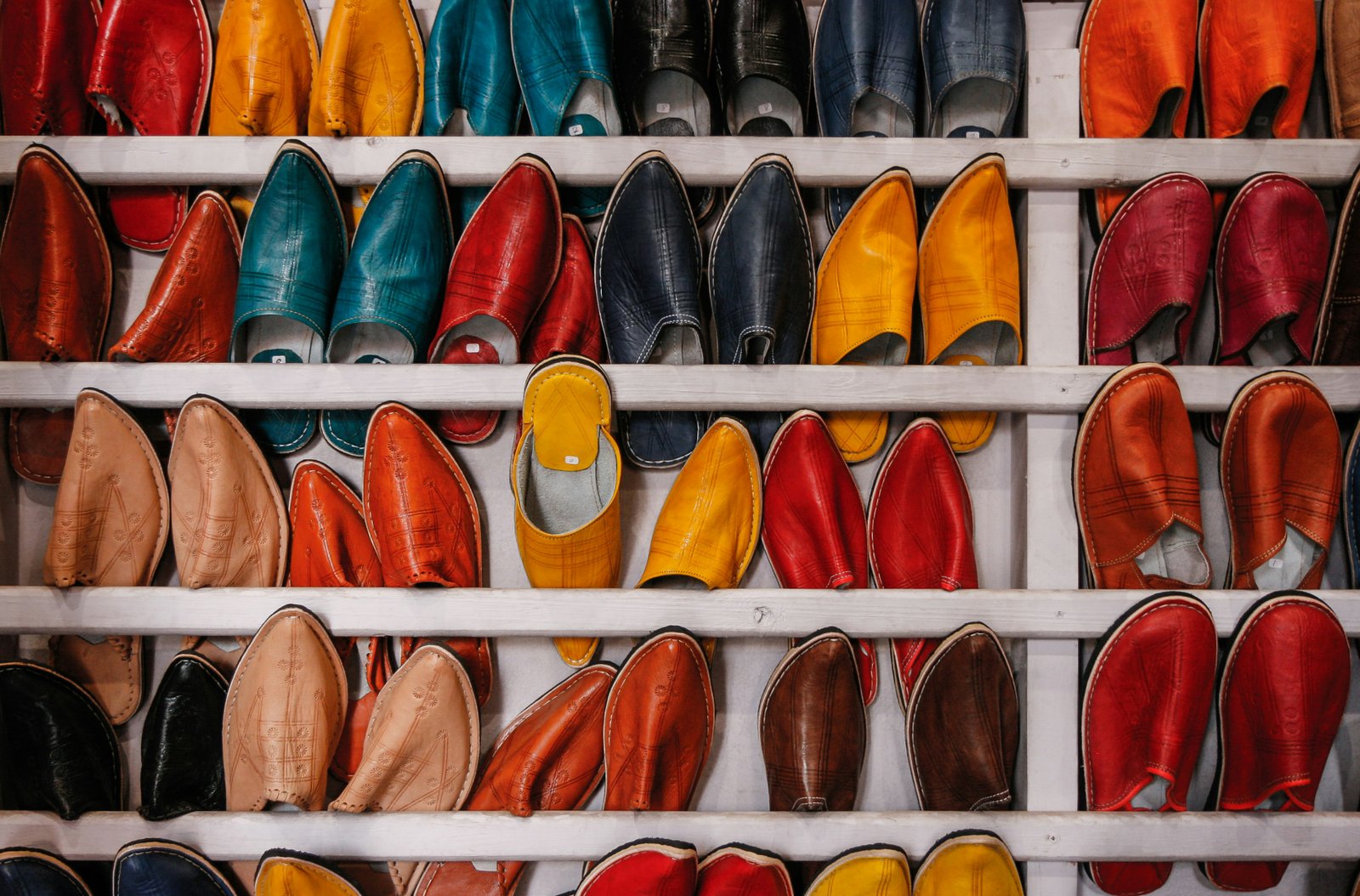
| Leather babouche slippers | 80–150 | 200–400 |
| Small ceramic tagine (decorative) | 40–80 | 150–300 |
| Handwoven scarf (cotton) | 60–120 | 200–350 |
| Argan oil (1 litre, cosmetic grade) | 200–350 | 500–800 |
| Brass teapot (medium) | 150–250 | 400–700 |
| Woven basket bag | 80–150 | 250–450 |
| Thuya wood box (small) | 60–100 | 150–300 |
| Rug (small, handmade Berber) | 800–2,000 | 2,000–6,000 |
Prices vary by city. Marrakech's Medina runs 15–25% higher than Fes or Meknes for comparable items because of heavier tourist traffic. Essaouira is mid-range. Chefchaouen adds a premium on anything blue-themed.
The Five-Step Negotiation Process That Actually Works
Bargaining in Moroccan souks follows a predictable five-step rhythm: browse silently, ask about craftsmanship, hear the price without reacting, counter at 40–50% of the asking price, and meet in the middle or walk away. The final agreed price typically lands at 50–65% of the seller's opening number. Here is each step in detail.
Step 1: Browse without asking prices. Touch items, look at quality, compare between shops. Sellers notice when you return to an item a second time — that signals real interest, which is fine. But do not ask the price of everything you glance at.
Step 2: Ask about the item first, price second. "Is this real leather or synthetic?" "Where is this rug from — Middle Atlas?" Asking material and origin questions tells the seller you know enough to evaluate quality. This alone lowers the opening price.
Step 3: Hear the price without reacting. The seller names a number. Do not laugh, gasp, or immediately counter. A neutral "hmm" or a pause works. Overreacting to the first price is the most common tourist mistake — it tells the seller exactly how unfamiliar you are with the market.
Step 4: Counter at 40–50% of the asking price. This is where the "offer half" advice comes from, and it is a reasonable starting range for most tourist-zone souks. In less touristy areas (Meknes, Taroudant, smaller medinas), start at 50–60% instead — the initial markup is smaller, so aggressive countering feels disrespectful.
Step 5: Meet somewhere in the middle — or walk away. The final price usually lands at 50–65% of the opening ask. If the seller will not come below what you think is fair, say "shukran" (thank you) and walk toward the next shop. If they call you back with a lower number, you have your answer. If they do not, the price was already close to their floor.
When You Should Not Bargain at All
Not everything in Morocco is negotiable. Bargaining in the wrong context makes you look disrespectful, not savvy. Fixed-price contexts in Morocco include grocery stores, supermarkets (Marjane, Carrefour, Acima), pharmacies, restaurants with printed menus, official cooperatives with posted prices, and petits taxis using the meter.
Food stalls in Jemaa el-Fnaa and similar tourist squares are a grey area. The prices on the board are mostly fixed, but some stalls inflate for tourists. If there is no price board, ask before sitting down.
Cooperatives — especially women's argan oil cooperatives along the Essaouira–Marrakech road — operate at fixed prices. These prices are usually fair and support the artisans directly. Attempting to bargain at a cooperative is poor form.
Grand taxis (shared long-distance taxis) have fixed route prices that every local knows. Ask another passenger or your riad host for the correct fare before getting in. Petits taxis in cities should use the meter — if the driver refuses, get out and take the next one.
What To Try Next
Souk price ranges shift by season, and the difference between a tourist-trap market and a local-oriented souk is hard to judge from a map alone. A written bargaining guide covers the principles, but no blog post can tell you which specific street in Fes has the best leather workers right now.
Native Journeys offers 1-on-1 consultations with Moroccans who grew up in Marrakech, Fes, and Essaouira — city-specific, week-specific detail that stays current when a blog post cannot. See what a planning consultation covers →
FAQ
Q: How much should I offer first when bargaining in Morocco? A: Start at 40–50% of the asking price in tourist-heavy souks like Marrakech or Fes el-Bali. In smaller cities with less tourist markup (Meknes, Taroudant), start at 50–60%. The final price typically lands between 50–65% of the original ask.
Q: Is it rude to bargain in Morocco? A: Bargaining is expected and normal in Moroccan souks — it is part of the shopping culture, not an insult. What is rude is bargaining aggressively on a price that is already fair, or negotiating hard on an item and then walking away after the seller agrees to your number.
Q: Do locals pay the same prices as tourists in Moroccan souks? A: No. Moroccan residents typically pay 20–60% less than the tourist starting price, depending on the item and location. This gap is widest in high-traffic souks like Marrakech's Medina and narrowest in local-oriented markets in smaller cities.
Q: Should I bargain for food in Morocco? A: Not in restaurants, cafés, or stalls with posted prices. Street vendors selling fruit, nuts, or spices by weight sometimes inflate prices for tourists — knowing the approximate per-kilo rate helps. Ask your riad host what a kilo of oranges or dates should cost before heading out.
Q: What is the best time of day to get good prices in Moroccan souks? A: Early morning (before 10 AM) often yields slightly better prices. Many Moroccan shopkeepers believe the first sale of the day brings good luck ("ftour el-yawm"), so they are more willing to negotiate to close that first transaction.
Conclusion
Bargaining in Morocco is not about winning a price war. Moroccan souk negotiation is a social exchange built on rapport, context, and fair value — not percentages. Learn the approximate worth of what you want, invest two minutes in conversation before talking numbers, and accept that paying more than a local is part of visiting as an outsider. A fair exchange beats the lowest possible number.